

Rest In Medicine: why its complicated
What life as a doctor finally taught me.
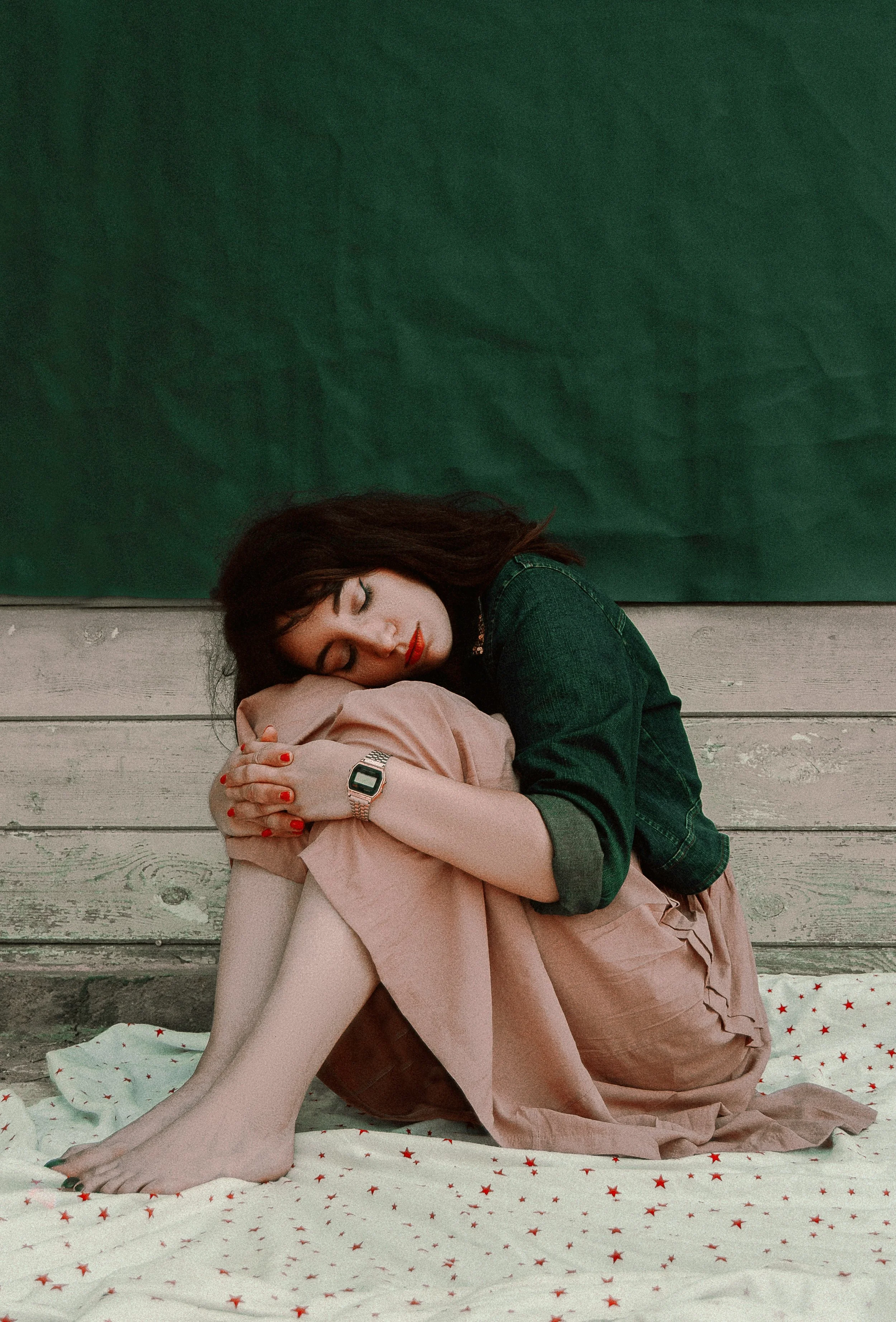
“What if we stop treating rest as a reward to earn and begin seeing rest as a gift to receive?”
As doctors, we know rest is essential. We tell our patients this. We understand the physiology. And yet, for many of us, rest remains one of the hardest prescriptions to write for ourselves.
It isn’t just about being busy, though our lives certainly are. It’s something deeper. When medical training shapes us to always be two steps ahead, to anticipate what could go wrong, hypervigilance becomes the baseline. When things go quiet, we often don’t settle into it. We replay our days. We worry about what we missed. We wait for the next thing to go wrong.
Rest, in that context, doesn’t feel safe. It feels unfamiliar. Uncomfortable. Like a luxury we haven’t quite earned.
I know this from the inside. I’ve worked as a doctor in the NHS for almost 20 years. I have had and continue to have, a complicated relationship with rest and sleep. Patterns that medicine carved into me. That I carried through every demanding day and night, thinking they were helping. Perhaps they were. But they have left their scars.
It wasn't until I stepped back from clinical work in 2018 that things began to shift. Slowly at first. A different perspective. A curiosity to understand myself better. And, perhaps most ironically, a tiredness with the patterns I'd always assumed were just part of who I was.
Through my coaching and space-holding with medics, I’ve also come to realise how many of us struggle with our relationship with rest. It stops being something we look forward to. It becomes just another item on the to-do list, slotted in after work, family, home. Then we think about sleep. After everyone else.
But rest isn’t just sleep. And it isn’t laziness. I love this from Nicola Jane Hobbs: “Rest is anything that makes our nervous system feel safe enough for our stress response to switch off so our minds and bodies can recover.” That reframing matters. Because most of us are trying to rest while still running on high alert, and wondering why it isn’t working.
I’ve been exploring this more deeply lately: reading, reflecting, and learning about the seven different types of rest described by Dr Saundra Dalton-Smith, physical, mental, emotional, social, sensory, creative, and spiritual. What strikes me is how rarely we tend to more than one or two of these, even when we think we’re resting. A long sleep doesn’t touch emotional exhaustion. A quiet weekend doesn’t necessarily restore a depleted sense of meaning.
What I keep coming back to, in my own life and in my work with doctors, is that sometimes the most powerful thing we can do is change the container entirely. Find a new view, not as an escape, but as permission to finally let the nervous system land somewhere different.
That’s what has been taking shape in my mind for a while now. A rest retreat. For doctors. In the place I love most.
—
I live in Yorkshire, and I don’t think I’ll ever stop being moved by it. The old stone walls and patchwork fields. The ancient forests. The way history and nature sit so comfortably together here. When I began imagining a retreat space for doctors, I knew immediately it had to be here, and I knew it had to be in summer.
There’s something about summer that’s often misread. We see the long days and push harder, squeeze more in. But traditionally, summer sits between the push energy of spring and the harvest energy of autumn, a natural pause. An invitation to soften. That felt like exactly the right note.
Langcliffe Hall found me at the right moment. Built in 1602, this Grade II listed Jacobean manor house in the Yorkshire Dales has been passed down through the maternal family line for over 400 years. It has weathered a great deal, and something about that quiet resilience feels fitting. It’s now home to Charlotte of NourishHQ, who tends its walled flower gardens, vegetable and medicinal gardens, and lush lawns with extraordinary care. The inside is just as nourishing: wood-panelled rooms, deep bathtubs, old books, art, a long dining table where meals are made from home-grown ingredients. Cosy reading nooks. Eight bedrooms, each with their own character. And out in the grounds, donkeys called Gavin and Lizzie, and a horse named Judas.
It is, in short, the kind of place that already knows how to hold people gently.
—
Whilst the retreat is designed around the seven types of rest, and rather than something to work through and tick off (tempting as that is…), it’s an invitation to notice what you’ve been missing and gently move towards it. Everything is optional. There is soft structure for those who want it, and silence and space for those who need it. Morning and evening circles, journalling prompts, nature-based meditations, a guided walk to a local waterfall, the chance to plunge in the spring-fed tank, nourishing food, flowers to arrange, gardens to wander.
No explanations needed. No advice given. Just a space held with compassion, surrounded by people who understand the path, because they’re walking it too.
This isn’t a cure. Rest, for many of us, is genuinely hard, and one weekend won’t undo years of learned hypervigilance. But it’s a start. A different kind of permission. A moment to practise something we haven’t quite allowed ourselves yet.
—
If this is calling to you, you can find all the details here.
I’d love for you to join us. Get in touch if you have any questions or want to chat more about whether its right for you.