

Creativity as Medicine: One Doctor’s Journey Back to Colour
“I found I could say things with colours and shapes that I couldn’t say any other way — things I had no words for.”
— Georgia O’Keeffe
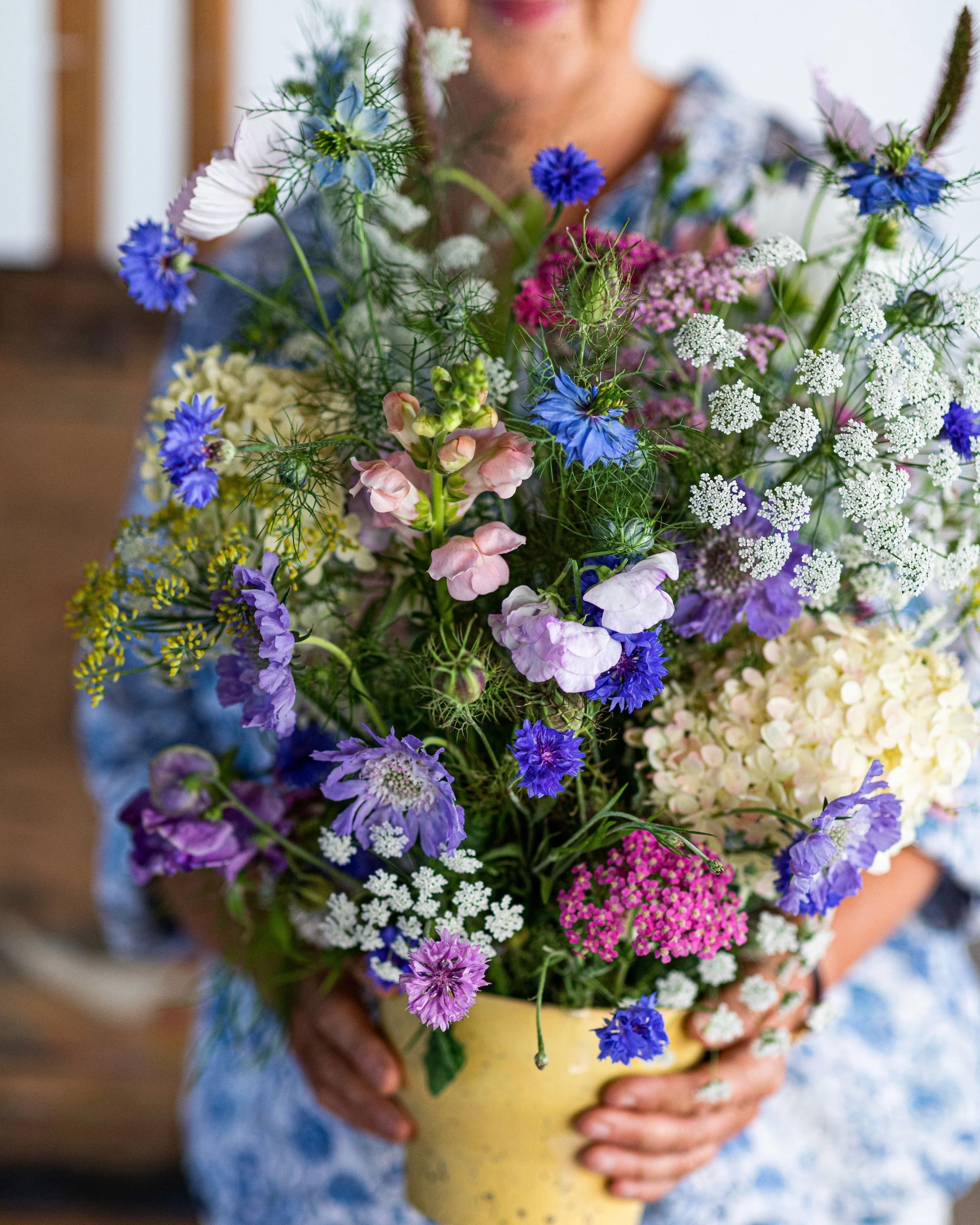
There was a time in my medical career when everything felt pared back to essentials, the focus was getting through each day. Medicine asked so much of me that the parts of myself that loved colour, beauty, and imagination slipped into the background. I didn’t even notice it happening. Many doctors don’t.
But years later, something unexpected called me home.
A handful of flowers.
The ritual of arranging stems.
The way colour softened the edges of my day.
The creative process did something I hadn’t anticipated. Choosing colours, appreciating tiny details, arranging form, working with my hands: it asked nothing of the professional part of me, and in that space, something returned. It reconnected me with the part of myself that makes things, for the pleasure of making them.
And from there, everything began to shift.
I thought it was just me. Then I started talking to other doctors.
The more doctors I spoke to, the more I wanted to understand what was actually happening. The research was striking.
Creativity does specific and measurable things to us. A 2016 study by Kaimal, Ray and Muniz found that just 45 minutes of art-making significantly reduced cortisol levels, regardless of prior artistic experience. The restoration happens whether or not you consider yourself artistic.¹
A more recent randomised controlled study by Moss et al. (2022) found that creative arts programmes led to significant improvements in anxiety, burnout scores, and job satisfaction among healthcare professionals. It is one of the strongest pieces of evidence yet that creative engagement has real clinical relevance for the people doing the caring.²
Creative practice also builds what Csikszentmihalyi called flow, a state of absorbed attention that is both deeply pleasurable and cognitively restorative. The opposite of the vigilant, fragmented attention that clinical work demands. Regularly accessing flow supports the capacity to return to that vigilance with more of yourself intact.³
The benefits extend into the consulting room and onto the wards too. A study at the University of Brighton found that medical students who engaged in collaborative drawing developed their observation skills and a continuously critical and creative frame of mind, skills they drew direct analogies with the process of medical diagnosis.⁴ Roshni Beharry, writing on creative writing in healthcare education, describes how it enhances empathy and compassion and fosters a sense of play.⁵ Norman Jackson, writing for the Higher Education Academy, notes that clinicians need to draw on creativity during the consultation process itself, and that good clinical decision-making requires both analytical and intuitive thinking.⁶
Perhaps most importantly, creativity reconnects us with agency. In a system that can feel relentlessly reactive, making something, however small, restores the felt sense, even if just for a moment, that we are authors of our own experience, and active participants in our own lives.
This matters more than it might seem. When that sense of agency erodes, when meaning, curiosity, and aliveness get worn down by systems that reward output and have little space for reflection, burnout can result. A 2025 scoping review in PLOS One, the first of its kind, reviewed 81 studies on creativity in medicine and nursing and concluded that while the evidence base is growing, creativity remains significantly underused as a resource for clinician wellbeing.⁷ A 2022 systematic review by Taber et al. reviewed 26 studies on visual arts interventions and found consistent improvements in stress among clinicians who engaged with them.⁸
Creativity tends to precisely what healthcare systems often neglect.
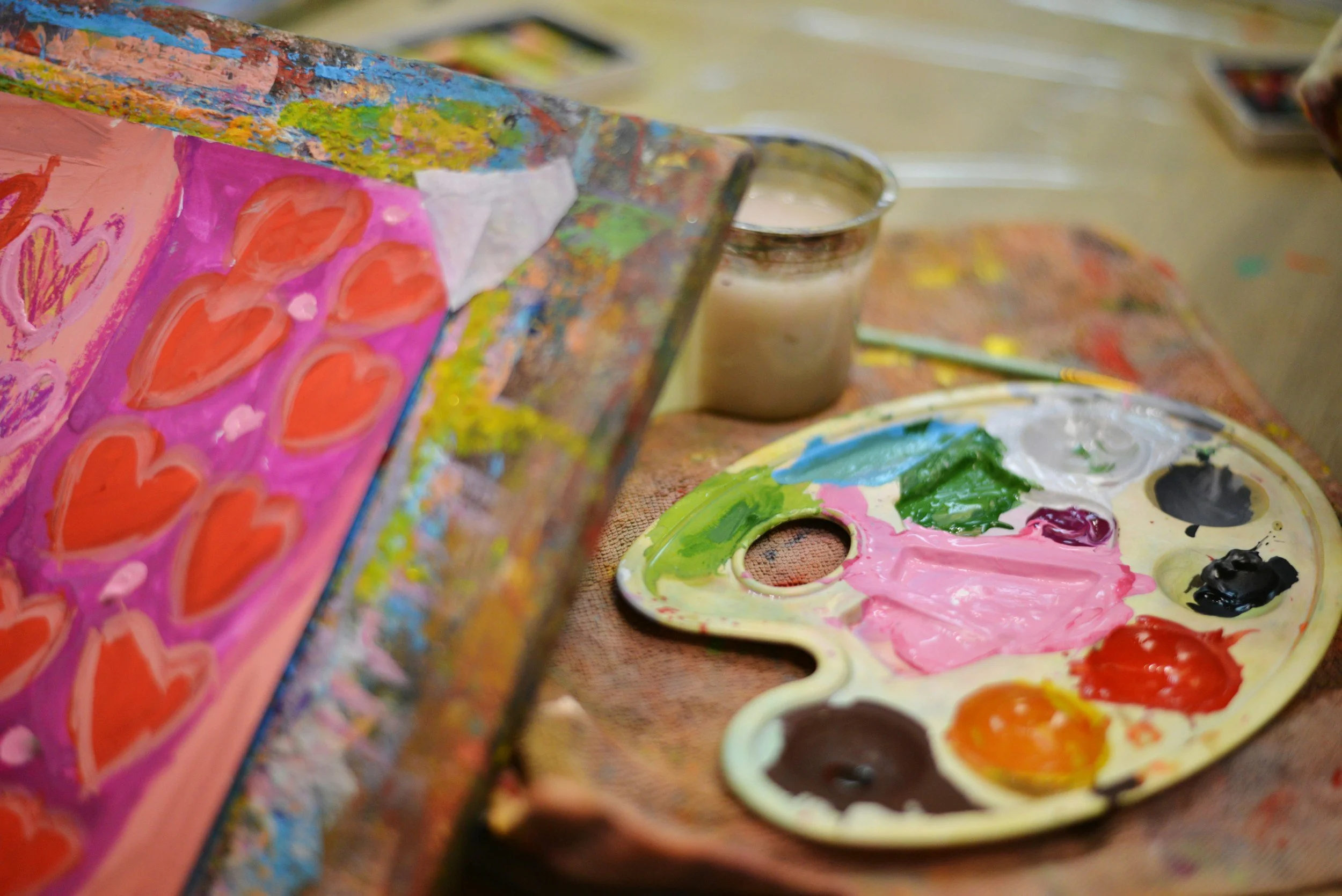
What strikes me, working with doctors, is how often there is something creative waiting just under the surface. A desire to draw. To work with colour. To write, or to make something with their hands. Lying dormant. Sometimes it awakens in the coaching process, or as a tentative desire to experiment. But more often it remains hidden under layers of clinical responsibility and rigid systems that reward compliance over curiosity.
Many doctors tell me some version of the same thing:
“I used to be creative as a child… I don’t know where that part of me went.”
Creativity rarely features in the identity of a doctor. We are trained in science, evidence, and procedure, not in expression or play. So when the creative impulse surfaces, it can feel almost alien - something that belongs to a different kind of person, a different kind of life. Many doctors need permission to try. The desire is there. What is missing is the sense that it matters.
What I find, again and again, is that when doctors reconnect with creativity something shifts in them. A sense of self that had been submerged begins to surface. There is autonomy in making something with no protocol, no outcome measure, no right answer. There is restoration in sitting with a process that has no plan. For doctors who spend their working lives managing uncertainty toward resolution, the experience of simply being in the unknown, without needing to fix it, can be unexpectedly liberating.
There is a particular kind of permission that comes from creative activity that exists entirely outside the clinical frame. Something chosen freely, pursued for its own sake, answerable to no one. Just making something because it calls to you.
Many doctors have spent so long practising in a culture of evaluation, where every action is measured, audited, or scrutinised, that genuine play feels almost transgressive. A creative pursuit outside the clinical gaze offers something rare: a space where you are free to experiment, and where getting it wrong is simply part of the process.
For some of us, the first creative act in years is transformative precisely because of its uselessness. A watercolour that will never hang anywhere. A poem written and not shown to anyone. A Sunday afternoon pressing flowers with no outcome in mind.
These matter. They are rehearsals for a different relationship with yourself, one in which you are permitted to be curious, incomplete, and alive to beauty without needing to perform competence.
And over time, something interesting tends to happen. The thinking that loosens in a sketchbook begins to show up in a consultation. The patience developed in a garden begins to soften a difficult conversation. The creativity nourished outside medicine feeds the doctor you are inside it. Those two selves are closer than most doctors realise or sometimes choose to believe.
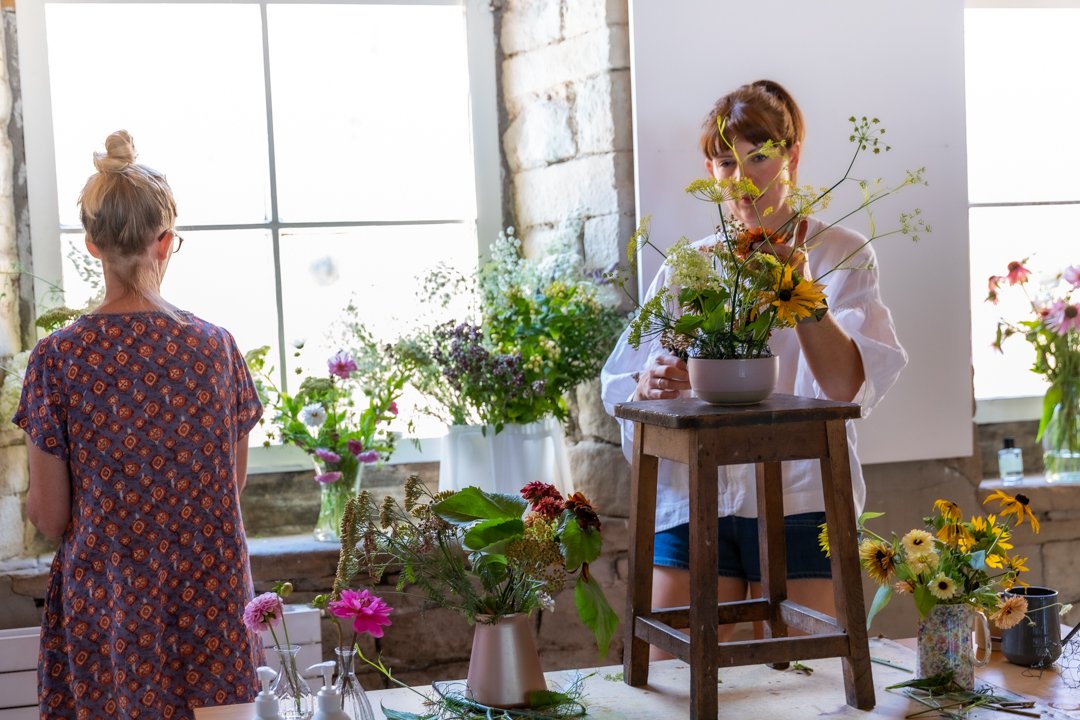
For me, flowers were the way in - a tentative starting point. There was something tangible and beautiful in them that asked me to slow down, to really pay attention. Playing with them eventually led me outdoors. Or was it the other way around? Perhaps it doesn't matter. What I know is that nature became a wider teacher — one I hadn’t realised how much I needed.
I began to notice what being outside did to my thinking. The quality of attention it asked for. The way of looking closely at a leaf, a branch, the gradations of colour in a winter sky, brought me back into the present tense. There was something in that quality of looking - unhurried, curious, without agenda, that began to feel like a practice in itself.
And somewhere in that slowing down, I began to notice what I had been carrying.
As a GP I had spent years holding others’ distress, fear, and uncertainty. The emotional weight of that accumulates in ways that are hard to explain. I realised I had carried a lot. More than I had acknowledged, even to myself. Creativity offered a different kind of processing: through making, through colour, through form. It became a way of tending to what the work had asked of me.
That is what I want for other doctors. Not to carry it alone, or to realise too late what they have been holding. I create the space and conditions to slow down, to reflect, to tend to themselves, with the same care they give to everyone else.
Earth and Bloom grew from that purpose.
Practical Starting Points To Explore Your creativity
These are invitations, drawn from my own journey and the doctors I work with. Small points of entry. Take what calls to you.
1. Start with colour
Pick one colour that draws you in. Find it in your day, in nature, in objects, in light, and let it anchor you. Creativity often begins with noticing.
2. Gather and place
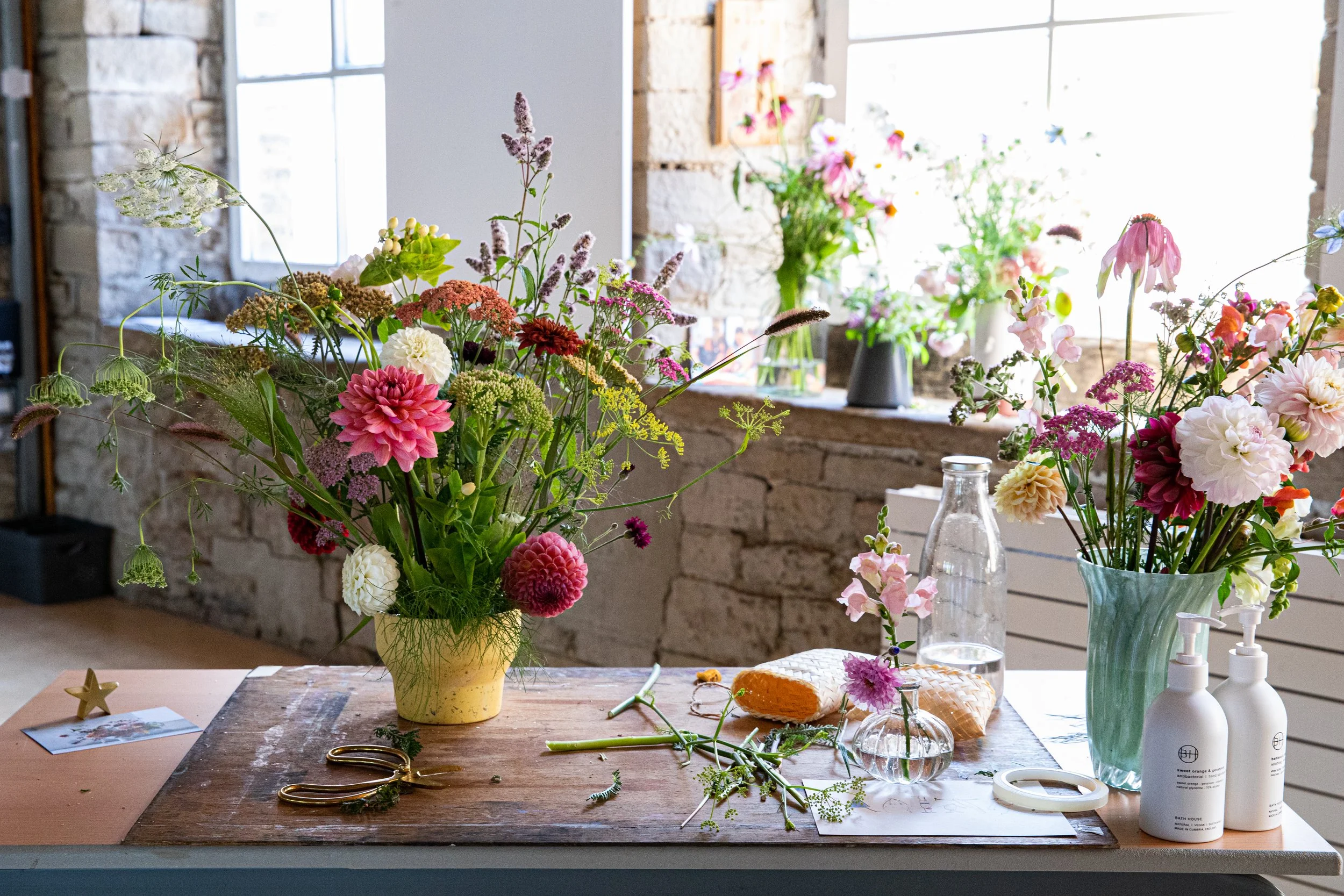
A few stems from a garden, hedgerow, or shop. Place them intentionally. Notice shape, texture, balance.
3. The one-minute “what I see” practice
On a walk, choose one natural object and write fifty descriptive words about it. It shocks the mind out of its habitual pathways and opens new ones.
4. Change the medium, change the thinking
Clay, collage, ink, charcoal, petals, leaves: each medium invites a different kind of attention. We often reconnect with imagination when we step out of words and into materials.
5. The “if I didn’t need to get it right…” prompt
Write a single sentence finishing that line. Creative thinking tends to appear where permission replaces pressure.
Medicine will keep asking a great deal of you. That is unlikely to change soon.
This is an offering, not a solution. Creativity will not fix what is structural or systemic about the difficulties of medical life. But it can return something to you: a thread back to yourself, to the person who existed before the role claimed so much.
The doctors I work with who try it tend to say the same thing. That something, however small, shifts. That they feel more like themselves.
A handful of flowers. A walk. A piece of clay. That is where it begins.
References
1. Kaimal, G., Ray, K. and Muniz, J., 2016. Reduction of cortisol levels and participants’ responses following art making. Art Therapy, 33(2), pp.74–80.
2. Moss, M. et al., 2022. The effect of creative arts therapy on psychological distress in health care professionals. American Journal of Medicine, 135(10), pp.1255–1262.
3. Csikszentmihalyi, M., 1990. Flow: The Psychology of Optimal Experience. New York: Harper & Row.
4. Lyon, P., Letschka, P., Ainsworth, T. and Haq, I., 2013. An exploratory study of the potential learning benefits for medical students in collaborative drawing: creativity, reflection and ‘critical looking’. BMC Medical Education, 13(1), p.86.
5. Beeharry, R. The potentials of creative writing in healthcare education. A word from the Editor, p.53.
6. Jackson, N. Creativity in medical education. The Higher Education Academy.
7. Scoping review on creativity in medicine and nursing. PLOS One, January 2025.
8. Taber, E. et al., 2022. Art interventions to mitigate burnout in health care professionals: a systematic review. The Permanente Journal.